
Many buyers ask about the difference between kundan and polki jewellery before they shop for a wedding or festival. Both styles look royal and rich, so people often mix them up. However, they differ in the stones they use, how makers create them, and how much they cost. This guide explains everything in simple words, so you can choose the right piece with confidence.
What Is Kundan Jewellery?
Kundan is a traditional Indian jewellery style. Artisans set stones into a base of pure, soft gold foil. The word “kundan” itself refers to this highly refined gold.
The style began in the royal courts of Rajasthan, especially in Jaipur. Later, it spread across India. Today, brides and festival wearers still love it for its bright, grand look.
In most kundan pieces, the stones can be glass, cubic zirconia, or real gemstones. Therefore, kundan comes in many price ranges.
What Is Polki Jewellery?
Polki is a style that uses uncut diamonds. These diamonds stay in their natural, raw form. Makers do not shape or polish them into the sharp, faceted style seen in modern diamond rings.
Because of this, polki has a soft, glowing shine instead of a sharp sparkle. It looks earthy, rich, and timeless.
Polki also has deep roots in Indian and Mughal-era jewellery. Even today, it remains a favourite for grand weddings.
How to choose wedding set for bride READ:-https://houseofshivaana.com/wedding-jewellery-set-for-bride/
The Main Difference in Stones
The stone is the biggest point in the difference between kundan and polki jewellery. Polki uses real, uncut diamonds. Kundan, on the other hand, uses a wider range of stones, and many are not diamonds.
In simple terms, polki refers to the type of stone. Kundan refers to the way the stone is set. That is why the two styles often appear together in one design.
The Difference in Setting
Kundan follows a special setting method. First, the artisan places a thin gold foil around the stone. Then, the artisan presses the stone into a lac base. This holds the stone firmly in place, and the gold foil gives it a warm glow.
Polki jewellery can use different setting methods. Many makers use the kundan method for polki diamonds too. As a result, you may find a piece that is both kundan-set and polki-stone.
Difference in Look and Shine
Kundan stones usually look clear and bright, with a smooth, glossy shine. The gold foil behind them adds a rich warmth.
Polki, in contrast, has a softer glow. The uncut diamond reflects light in a gentle, natural way. So, polki looks more subtle and antique, while kundan looks bold and glamorous.
Also, polki stones vary slightly in shape and size, since makers keep them in their natural form. This gives each piece a unique charm.
Difference in Price
Price is another clear point of difference. Polki costs more because it uses real diamonds. The price also depends on the diamond weight, quality, and gold used.
Kundan usually costs less, especially when makers use glass or cubic zirconia stones. Still, kundan made with real gems and pure gold can be expensive.
Meanwhile, artificial kundan sets offer a budget-friendly choice. They work well for brides who want a grand look without a big spend.
Difference in Weight and Comfort
Kundan pieces are often heavy, since makers use gold foil, lac, and layers of stones. Yet, lightweight kundan designs are now common, especially in artificial jewellery.
Polki jewellery can also feel heavy, but makers often design it in slimmer forms. If comfort matters, try the piece on before you buy. A necklace or earring that feels fine for five minutes may feel heavy after five hours.
Quick Comparison
Here is a simple summary:
- Stone: Polki uses uncut diamonds. Kundan uses glass, gems, or other stones.
- Meaning: Polki describes the stone. Kundan describes the setting style.
- Shine: Polki gives a soft glow. Kundan gives a bright, glossy shine.
- Price: Polki costs more. Kundan offers wider price choices.
- Best for: Polki suits grand weddings. Kundan suits weddings, festivals, and parties.
How to Choose Between the Two
First, decide your budget. If you want real diamonds and a long-term investment, polki fits well. If you want a rich look at a lower price, kundan works better.
Next, think about the occasion. For a bridal ceremony, both styles work. For festivals like Diwali or Karwa Chauth, kundan is a popular pick because it looks festive and costs less.
Also, consider your outfit. Heavy silk sarees and lehengas look lovely with either style. For lighter outfits, choose delicate pieces so the jewellery does not overpower your look.
How to Spot Real Polki and Kundan
Check for a proper bill and certificate. For gold content, look for the BIS hallmark. You can read about hallmarking rules on the Bureau of Indian Standards website.
In addition, look closely at the stones. Real polki diamonds show small natural variations in shape. If every stone looks perfectly identical, ask the seller more questions.
Finally, buy from a trusted jeweller. This protects you from fake or overpriced pieces.
Care Tips for Both Styles
Good care keeps your jewellery beautiful for years. Follow these simple steps:
- Keep the jewellery away from water, perfume, and sweat.
- Wipe each piece gently with a soft, dry cloth after use.
- Store each piece in a separate pouch to avoid scratches.
- Avoid harsh cleaners, since they can loosen the stones.
Because the lac base can soften with heat and moisture, store your pieces in a cool, dry place.
Final Thoughts
The difference between kundan and polki jewellery comes down to stone, setting, shine, and price. Polki uses uncut diamonds and gives a soft, royal glow. Kundan uses gold foil setting with many stone types and gives a bright, festive look.
Both styles are beautiful, and both carry Indian tradition. Choose based on your budget, occasion, and outfit. When you understand these points, you can shop smartly and pick a piece you will love for years.
Related posts
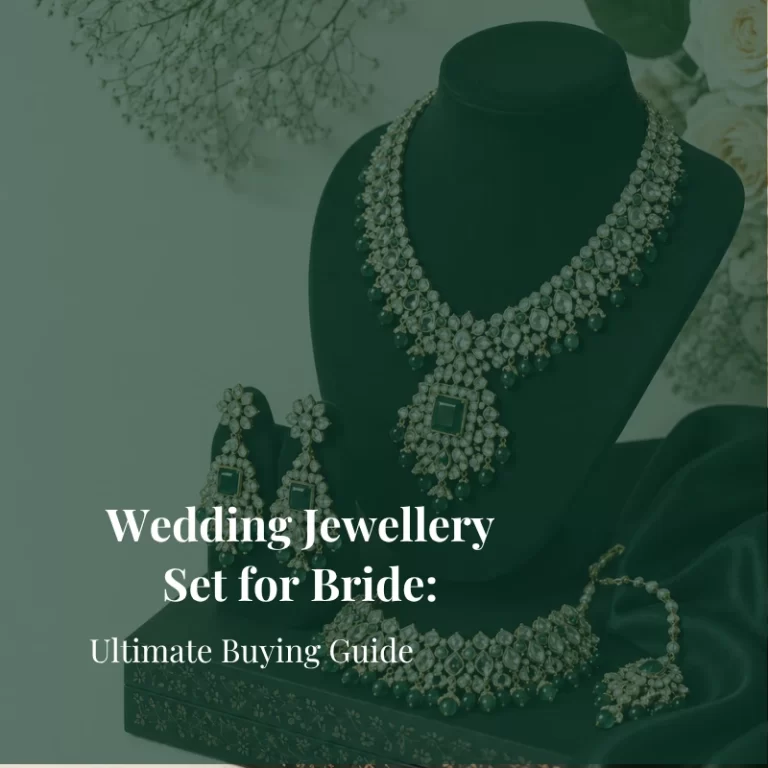
Wedding Jewellery Set for Bride: Ultimate Buying Guide
Choosing a wedding jewellery set for bride is one of the most emotional parts of wedding planning. The right set completes her look, carries…

Best Gifts For Wife: Buy Unique Jewellery Gift Ideas Online
Finding the best gifts for wife can feel tricky. You want something that shows your love, lasts for years, and matches her taste. Jewellery…
How to Clean Oxidised Jewellery: A Complete Guide
Oxidised jewellery has become a favorite among women who love bold, ethnic designs with a rustic, antique finish. However, many women wonder how to…